
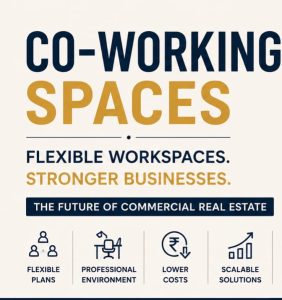
Co-Working Spaces: The Future of Flexible Workspaces
The way businesses work is changing — and co-working spaces are at the heart of this transformation.
From startups and freelancers to established companies and remote teams, businesses are increasingly looking for flexible, professional and cost-efficient workspaces without the long-term commitments of traditional office leasing.
Why Co-Working Spaces Are Growing
A modern co-working space offers much more than a desk. It can provide:
- Flexible Plans – Choose workspace options according to your business requirements
- Professional Environment – Work in a productive and well-equipped office atmosphere.
- Lower Setup Costs – Reduce the expense of furnishing and managing a conventional office.
- Networking Opportunities – Connect with entrepreneurs, professionals and potential business partners.
- Scalability – Expand or reduce your workspace as your business changes.
- Prime Locations – Access strategically located commercial spaces without committing to a large conventional office.
Co-Working as a Real Estate Opportunity
Co-working spaces are also becoming an interesting segment within commercial real estate investment.
Locations with strong connectivity, growing business activity, proximity to residential catchments and supporting infrastructure can create attractive opportunities for both operators and property investors.
However, before investing or leasing a commercial property for co-working purposes, factors such as title verification, commercial usage, zoning, approvals, building compliance, documentation and overall property viability should be carefully evaluated.
The Right Space. The Right Location. The Right Decision.
Whether you are looking to invest in commercial property, lease a workspace, evaluate a co-working opportunity or identify a suitable commercial location, professional property due diligence can make a significant difference.
Conclusion
Co-working spaces are more than a modern workplace — they represent the growing demand for flexibility, connectivity and efficiency in commercial real estate. With the right location, proper approvals and thorough due diligence, co-working properties can offer valuable opportunities for businesses and investors alike.
को-वर्किंग स्पेस सिर्फ काम करने की जगह नहीं, बल्कि लचीलेपन, कनेक्टिविटी और बेहतर कमर्शियल रियल एस्टेट अवसरों की बदलती जरूरत का हिस्सा है। सही लोकेशन, उचित अप्रूवल और पूरी प्रॉपर्टी जांच के साथ को-वर्किंग स्पेस व्यवसायों और निवेशकों दोनों के लिए एक बेहतर अवसर बन सकता है।
JMK LIAISONING – RERA Registered
Helping you make informed and confident property decisions.